You have been told to feel your feelings. Sit with it. Let yourself feel it. Maybe a therapist said it. Maybe a book did. Maybe you have said it to yourself a hundred times, in the middle of the night, when the same old ache came back.
And it sounds so simple. Until you actually try.
Because the moment you turn toward a hard feeling, one of two things happens. Either you slam the door and change the channel, get busy, get numb, get gone. Or you fall straight in and drown, spinning the story for hours, feeling worse with every lap. Nobody ever told you there was a third thing. A way to be with a feeling that is neither running from it nor wallowing in it.
That third thing is the whole practice. And you can learn it.
I Spent Twenty Years Feeling Around It
Let me tell you how I found this, because I found it the slow way.
For most of my life, I ran. I lost my father at eight and my mother at sixteen, and I did not sit with any of it. As a boy I ran with speed and adrenaline. As a man I ran with achievement, with performing, with being the one who had it all handled. Then I got serious about healing. I read the books. I sat twenty-two silent retreats. I could name every pattern I carried and trace it to the room it started in.
And the feelings never moved. Not really.
Because I was doing what most of us do. I was feeling around the feeling. I was thinking about my grief instead of feeling it. I was analyzing the fear instead of staying in it. I had my awareness cranked all the way up and I was still, somehow, standing just outside the door. It took me years to understand something almost embarrassing in its simplicity. To sit with difficult emotions, you have to stop going to your head about them. You have to go the other direction. Down, into the body.
I was thinking about my grief instead of feeling it.
First, Find Where It Actually Lives
Here is where the practice actually begins, and it is not where you think.
A feeling is not a thought. Grief is not the thought that says you are grieving. Anger is not the case you are building against the person who wronged you. Those are stories about the feeling. The feeling itself is physical. It lives in the body. It has a place, a shape, a temperature.
So the first move is to find it. Not the story. The sensation.
Close your eyes if you can, and ask a simple question. Where is this in my body right now? Then wait. Do not answer from your head. Let the body show you. Most of the time it is somewhere along the center line. A weight on the chest. A fist in the stomach. A grip in the throat. Heat climbing the neck. A hollow, dropping feeling behind the ribs. It will have a texture. Tight, heavy, buzzing, cold, sharp. It may be hard to describe, and that is fine. You are not naming it to file it. You are locating it so you have somewhere real to place your attention.
The story wants your attention up in your head, where it can keep talking. The feeling is waiting down in your body, where it cannot say a word. Go to where it cannot talk.
Staying, One Moment at a Time
Now the actual work. You put your attention on the sensation, and you stay.
Let me be honest about what staying is, because it is quieter and harder than it sounds. Staying is not gritting your teeth and enduring. It is not forcing the feeling to get bigger or trying to make it go away. It is a soft, steady contact. You feel the tightness in the chest, and you simply keep it company. You let it be exactly as big as it is. You are not here to fix it. You are here to feel it, all the way, without leaving.
And here is the part nobody warns you about. You will not stay for long. Ten seconds in, maybe two, the mind will bolt back to the story. It will start explaining, defending, replaying, planning. This is not failure. This is exactly what running looks like from the inside, and it is subtle. So the practice, moment to moment, is just this. You notice you have drifted up into the story, and you come back down to the sensation. Again. And again. Staying is not one heroic act of holding on. It is a thousand small returns. You leave, you come back. You leave, you come back. That returning is the practice.
Staying is not one heroic act of holding on. It is a thousand small returns.
As you stay, watch what the sensation does. Do not manage it. Just watch. It may swell. It may move. It may bring up an image or a memory or a wave of tears. Let all of it come. Your only job is to keep your attention in the body and not run. Because something is happening that has never been allowed to happen before. The feeling you always fled is finally being felt. And a feeling that is truly felt, all the way through, begins to move.
Feeling It Is Not Wallowing In It
This is the distinction that changes everything, so let me make it clean.
There is a way to sit with a feeling that heals, and a way that only deepens the wound. They can look almost identical from the outside. The difference is where you are.
Wallowing lives in the story. It is rumination. It is going over and over what they did, what it means about you, how it will ruin everything. It feels like feeling, but it is actually thinking, on a loop, and every lap pours fresh fuel on the charge. You can spend three hours lost in your feelings and come out more raw than when you started. That is not sitting with the emotion. That is the mind running in circles, using the story to keep the real sensation at a distance.
Sitting with it lives in the body. It is wordless. When you catch the story starting up, you gently drop back out of the words and into the raw sensation underneath them. No narrative. No case. Just the weight, the heat, the grip, felt directly. This is what settles a feeling instead of feeding it. The story keeps the emotion spinning. The body lets it complete.
Am I in the words, or am I in the sensation?
If you are in the words, you are wallowing, and the way out is not to stop feeling. It is to drop lower, beneath the story, into the body, and stay there.
You understand it now. And that is exactly where I have to be honest with you.
Understanding how to sit with difficult emotions is not the same as sitting with them. This whole essay just handed you a clear map, and the clarity feels like progress. It is not progress yet. The gap does not close on the page. It closes on some ordinary afternoon when the old feeling rises in your actual chest, in your actual life, and everything in you wants to run or to spin the story, and instead you go quiet, drop into your body, and stay.
That is not something to grasp. It is something to practice. And it is genuinely hard to do alone, because the pull to run is strong and the moments come fast. This is what shadow work is underneath all the language. Not analyzing yourself. Learning to stop running and stay with what you have been avoiding, in the body, until it moves.
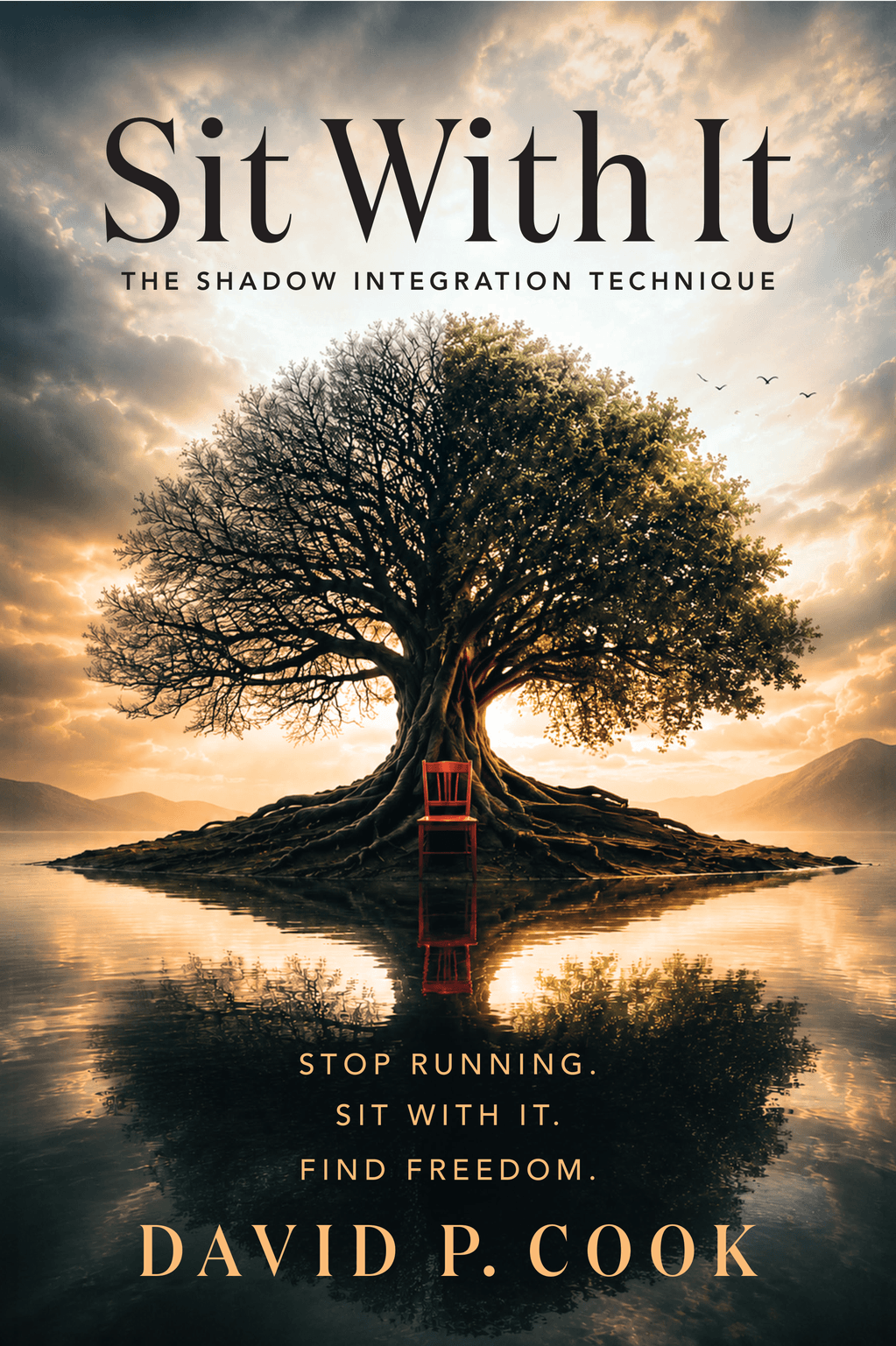
That staying is the entire practice. It is what SIT means, the Shadow Integration Technique. And learning to do it, one real moment at a time, with something to hold you steady while you learn, is what the seven-day retreat was built for.
Reading this was the map. The staying is the ground. That is where we begin.
David P. Cook
Founder, ShadowLight Institute
These essays are a teaching and a practice, not psychological or medical treatment. If you are in crisis, or working with trauma that does not feel safe to meet alone, begin with a licensed professional. The work here will keep. It waits for you.