Picture two people who both say nothing gets to them anymore. The first went quiet because something in them stopped answering. The second went quiet because they can finally hold what used to knock them flat. Same steady face. Same even voice. Two opposite worlds inside. And almost nobody teaches you how to tell which one you are becoming.
The word equanimity gets passed around until it loses its edge. It starts to sound like a setting on a dial. Cool. Unbothered. Above it all. Someone who has meditated long enough that life no longer reaches them.
That is not equanimity. That is running, gone so quiet it looks like peace.
I Mistook the Wall for Peace
I know this one from the inside. For a long time I was the strong one. The one who had it handled. Nothing got to me, and I was proud of that. I lost my father, then my mother, early and hard, and somewhere in there I learned to go still. To feel less. To keep the wall up and call the quiet behind it strength.
It was not strength. It was distance. I had not made peace with the grief, I had cut the line to it. And a wall does not know the difference between what it keeps out and what it keeps in. Everything got quieter. The pain, yes. Also the color. The appetite. The reach toward anything that once pulled at me.
I could name all of it. I could trace every piece of it to the room it started in. And I was still running. I had just found a way to run while sitting perfectly still.
What Numbness Really Is
When a system takes on more than it can carry, it often does something protective. It turns the volume down. Feeling that has nowhere to go can get shut off near the source, and you are left alive on a narrower band than you were born with. Less grief. Also less color, less appetite, less reach toward the things that used to pull at you.
From the inside it can pass for progress, especially if you have lived through years of being flooded. When the storms finally stop, the flat gray afterward feels like calm. It is not calm. It is a foot held down on a brake, and the holding costs you something every single day.
Here is the tell. The person who has gone numb has not finished with their anger, they have lost the line to it. They are not done grieving, they are fenced off from it. Ask them to feel any of it on purpose and there is nothing to reach. Just a smooth surface where a whole room used to be.
Numbness sounds like:
"None of that gets to me now. I am past it. I did the work. I do not react to those things anymore."
Equanimity sounds like:
"That landed. Something rose up hard. And I stayed with it, without running and without becoming it, until it moved through and set me down again."
What Equanimity Really Is
Equanimity is not less feeling. It is more room to hold feeling. It is the capacity to let grief be grief, anger be anger, fear be fear, and not get thrown off your feet by any of it. The intensity is not filed down. What changes is what the intensity can do to you.
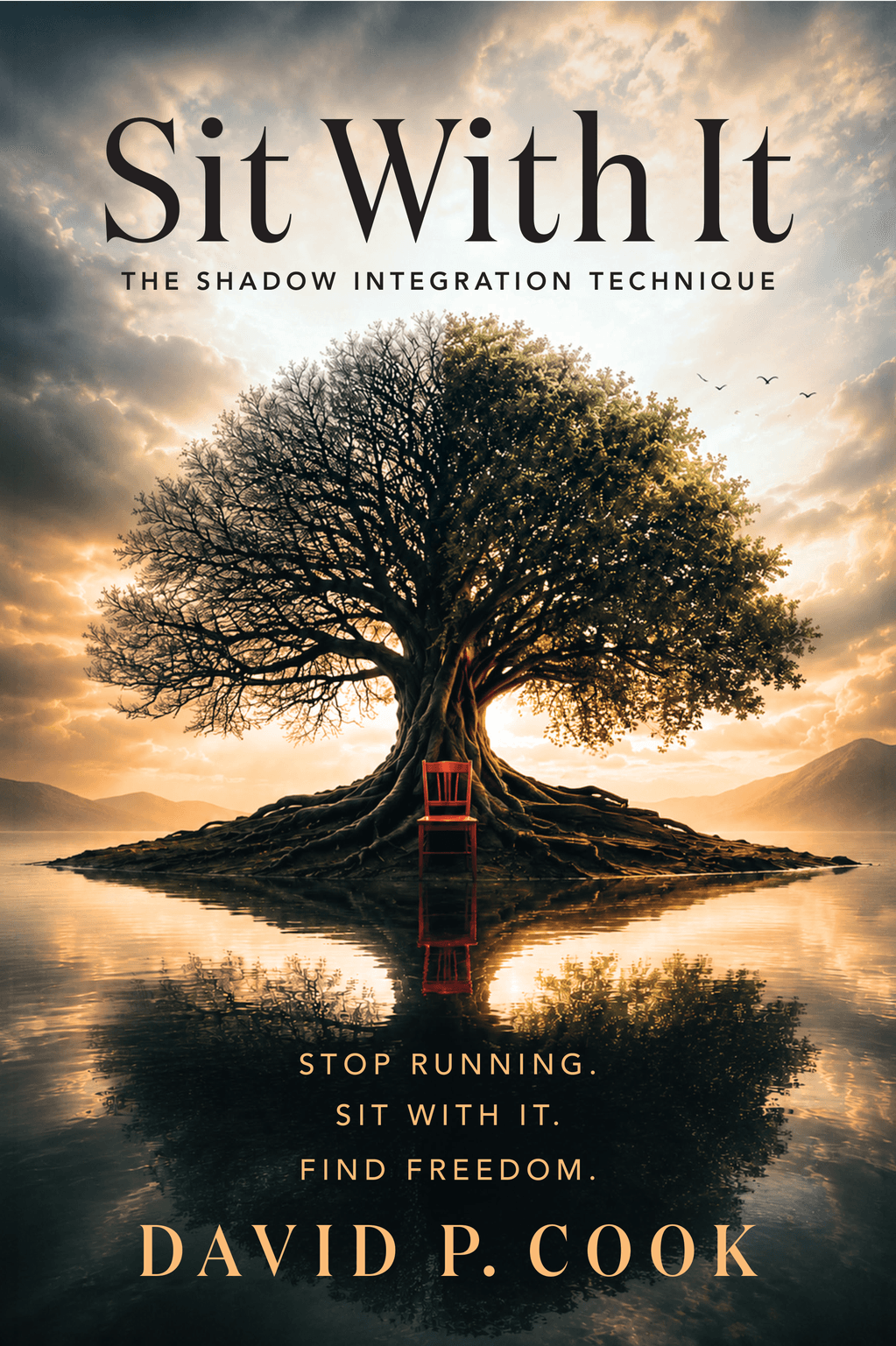
Picture a tree in a hard wind, not a stone that refuses to move. The stone resists everything and feels nothing. The tree bends the whole way into the gust, branches thrown sideways, and its roots hold. It is not spared the weather. It is built to be moved by the weather without being taken by it.
From that kind of ground, grief can be felt all the way through without swallowing you. Anger can rise without becoming a thrown punch or a slammed door. Love can go deep without you vanishing into someone else. This is not stepping back from your life. It is stepping all the way into it and finding you can bear the whole thing.
This is not the same as knowing what to do. Equanimity does not hand you the right action, and it does not make you wiser or better than anyone still getting knocked flat. It is a capacity, not a virtue. What it offers is room. Room to feel clearly enough that care, grief, conviction, and love can help you choose, instead of the reaction choosing for you.
Numbness feels nothing and calls it peace. Equanimity feels everything and is not overthrown by it.
Why the Confusion Costs So Much
Most people come to this work carrying a hope they would not say out loud. To stop feeling the things that hurt. They want the reactivity gone, the volatility gone, the ache turned down to something they can manage. And there are practices everywhere that seem to promise exactly that.
Chase that hope straight on and you do not find freedom. You find a well-defended kind of running. Awareness that was meant to open you gets used to skip past what is hard. Feelings get named and reframed and set down before they were ever actually felt. What you build is a calm you have to keep enforcing, which is another way of saying it is not calm at all.
And because numbness and equanimity wear the same steady face, you can practice for years, get quieter and quieter, and mistake a slow shutting down for a deepening steadiness. They are not the same road. One narrows you toward absence. The other widens you toward presence.
How the Real Thing Is Built
You do not build equanimity by getting better at avoiding intensity. You build it by staying, on purpose, inside the intensity you used to flee. When the old feeling rises, you do one of two things. You run, or you react. You go quiet and leave the room in your body, or you throw the feeling at whoever is closest. Both are ways of not staying.
There is a third way, and it is the whole of this. You stay. You feel the chest pull tight. You feel the pull to flee or to fight. And you remain, right there inside it, without leaving yourself and without becoming the wave. Each time you do, you teach the body something it could never be told. That this can be felt, and survived.
Do that enough and the shape of your response actually changes. The range of what you can feel without losing yourself gets wider. The reflex to clamp down loosens its grip. What used to take you on contact becomes something you can stand inside, and watch, and let pass. From the outside it may read as calm. From the inside it is the opposite of numbness. It is being all the way here, able to live your own life without having to shield yourself from it.
Equanimity is not the fruit of becoming less. It is the fruit of becoming large enough to hold what is here.
It never asks you to stop feeling. It asks you to stop being run by what you feel. That single turn is the whole gap between a life quietly managed by suppression and a life that is actually free.
Understanding is not the change. Staying is.
You can tell the tree from the stone now. On the page, the difference is clear. But no amount of reading ever widened your capacity to stay. That is built one way only. By remaining inside a feeling you would once have fled, in real time, in the body, until it moves all the way through you and sets you down again. You learn it the way a tree learns wind. Not from the idea of the storm, but from being bent by it, and holding.
David P. Cook
Founder, ShadowLight Institute
These essays are a teaching and a practice, not psychological or medical treatment. If you are in crisis, or working with trauma that does not feel safe to meet alone, begin with a licensed professional. The work here will keep. It waits for you.